
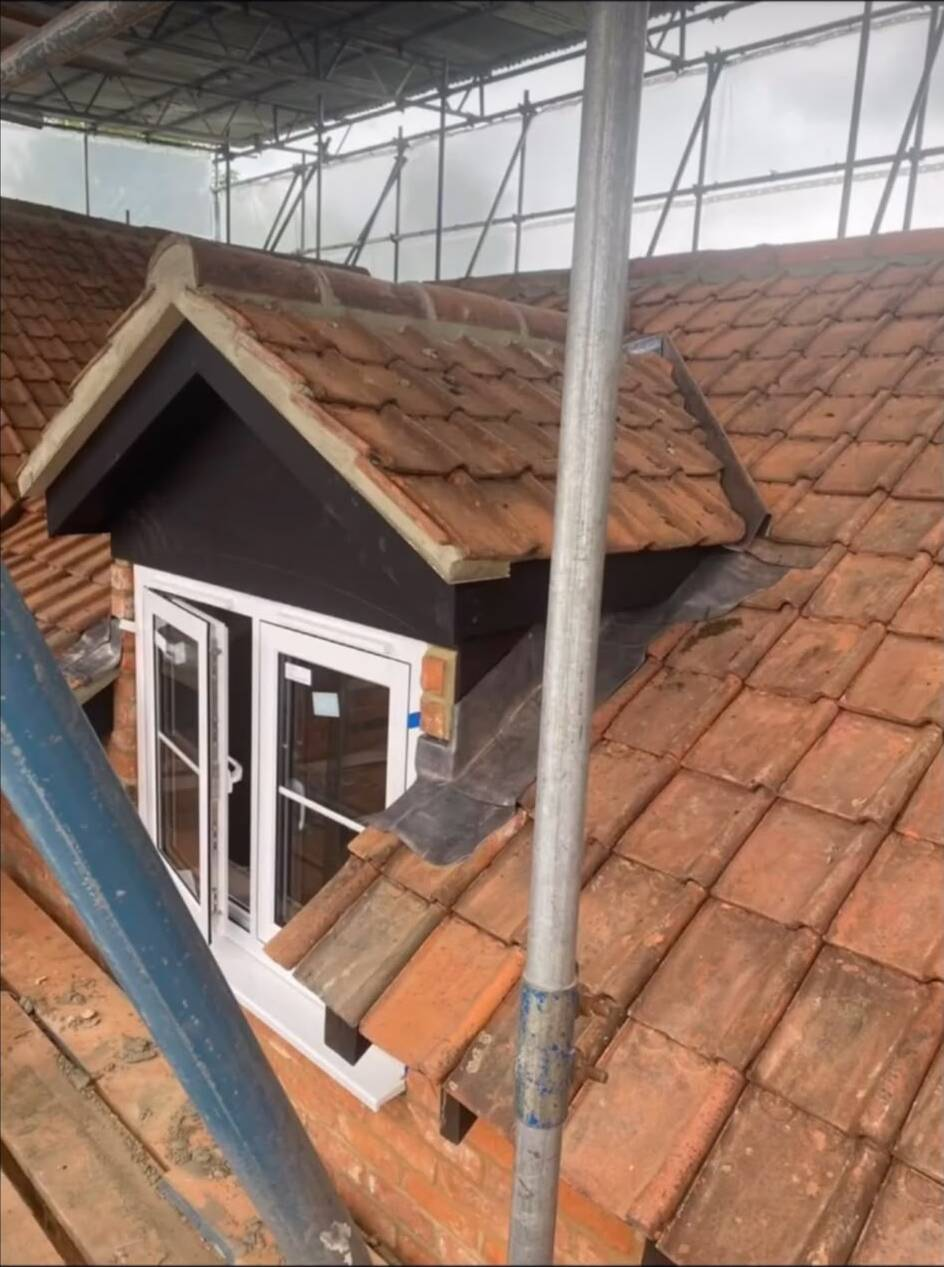
Services · Roofing
Roofing in Hertfordshire —structural roof work tied intothe wider building envelope.
Structural roof works, dormers, flat-roof extensions and re-roofing — treated as part of the whole building envelope, coordinated with insulation, ventilation and joinery rather than done in isolation.
£1M public liability · 12-month workmanship guarantee · Hertfordshire-based, owner-led builds.
Experience
20+ years
Public liability
£1,000,000
Rating
4.98 / 5
Trust a Trader
Guarantee
12-month workmanship
Certified
BM TRADA · City & Guilds L3
Overview
What a Barnett's roofing project actually covers.
What it is
Roof work as part of larger renovation, extension and loft-conversion projects — cut roofs, prefabricated truss work, flat-roof extensions with high-performance membranes, dormers, lead detailing and re-roofing.
Who it's for
Homeowners in Hertfordshire whose roof work is part of a bigger project — an extension, a loft conversion, or a whole-house renovation — where the roof needs to be coordinated with insulation, ventilation, plastering and joinery.
When you need it
When the existing roof is failing, when a loft conversion or extension requires structural roof modification, when a flat-roof extension has reached the end of its membrane life, or when a dormer is being added.
Why it matters
Because the roof is a system, not a covering. Insulation, ventilation, structure, coverings and joinery all need to work together — or the finished roof will condensate, leak or short-cycle its coverings.
What goes wrong
The cost of getting this wrong.
Roof problems are rarely just about the tiles. The signs show up on the ceiling below — damp patches, cold spots, condensation — but the causes are usually up in the build-up.
Risks if ignored
- —New roofs built without proper ventilation between insulation and membrane — condensation, black mould, rotted rafters within a decade.
- —Flat-roof extensions covered in generic EPDM without proper falls or upstands, ponding water for years until it finds a joint.
- —Dormer cheeks under-insulated, creating cold bridges that show as damp stripes on the internal plaster.
- —Lead flashings dressed carelessly, lifting in high wind and letting water in at parapets and chimney stacks.
- —Trussed roofs modified without engineering advice, weakening the whole structure.
Common mistakes
- —Treating a leak as a covering problem when it's actually a flashing or ventilation problem.
- —Choosing the cheapest membrane on a flat-roof extension — the difference in twenty-year cost is enormous.
- —Blocking eaves ventilation with insulation during a loft conversion.
Our process
How a roofing project runs, step by step.
01
Site visit & inspection
We inspect the existing roof, take measurements, and diagnose the actual failure — not just the symptom on the ceiling.
02
Quotation & specification
Fixed itemised quotation covering coverings, structure, insulation, ventilation and any lead or flashing detail.
03
Strip & structural works
Existing coverings removed, structural repairs or modifications completed, roof made ready for new build-up.
04
Insulation & ventilation
Insulation installed and ventilated correctly for the roof type — warm-roof or cold-roof detailing depending on the space below.
05
Coverings & flashings
New coverings laid, ridge and hip detail completed, lead flashings dressed and pointed at abutments and chimneys.
06
Internal integration & handover
Where the roof is part of a larger job (loft, extension, dormer), internal plaster, joinery and decoration are completed and coordinated. Warranty and workmanship guarantee handed over.
Benefits
What you actually get from Barnett's Bespoke.
Roof treated as a system
Structure, insulation, ventilation and covering coordinated together — not fixed piecemeal.
Coordinated with the wider build
Joinery, plastering and decoration inside are all part of the same programme, so nothing is done twice.
Quality coverings and membranes
High-performance EPDM, GRP or single-ply on flat roofs; concrete, clay or slate tile on pitched roofs — chosen to match the property and the exposure.
Lead and flashing detail done properly
Because we lead every project, flashings are dressed and pointed to hold up long-term — not just to pass a first-year inspection.
Building Control coordinated
Where structural changes require sign-off, we book, attend and hold the certificates.
12-month workmanship guarantee
Standard, in writing, on every roof job we take on.
In detail
The specifics behind the roofing.
Materials, methods, variations and the things that actually decide whether the finished job holds up over the decade after we hand it over.
Types of roof work we take on
Pitched roof re-covers (tile, slate, concrete), flat-roof extension coverings (EPDM, GRP, single-ply, hot-melt), dormer construction and re-cladding, structural roof modification for loft conversions, lead flashings at parapets and chimneys, and roof insulation upgrades.
Warm-roof vs cold-roof construction
A warm roof puts the insulation above the structure (on top of the deck or rafters), keeping the structure at internal temperature — used on modern flat-roof extensions. A cold roof puts insulation below the structure, requiring ventilated air gaps above — traditional for pitched roofs. Which one is right depends on the space, the height and the intended use.
Flat-roof membrane options
EPDM rubber membranes for cost-effective long-life coverings, GRP fibreglass for high-traffic areas, single-ply PVC for larger commercial-style installations, and hot-melt systems for green or blue-roof applications. Each has different upstand requirements, joint detailing and expected life.
Ventilation — the invisible half of every roof
Every pitched roof needs continuous ventilation at eaves and ridge. Every warm flat roof needs continuous vapour control below and drainage above. Get either wrong and condensation, not rain, will be what damages the ceiling below. This is the single most-common cause of the 'my new roof is leaking' phone call — it isn't, it's the ventilation.
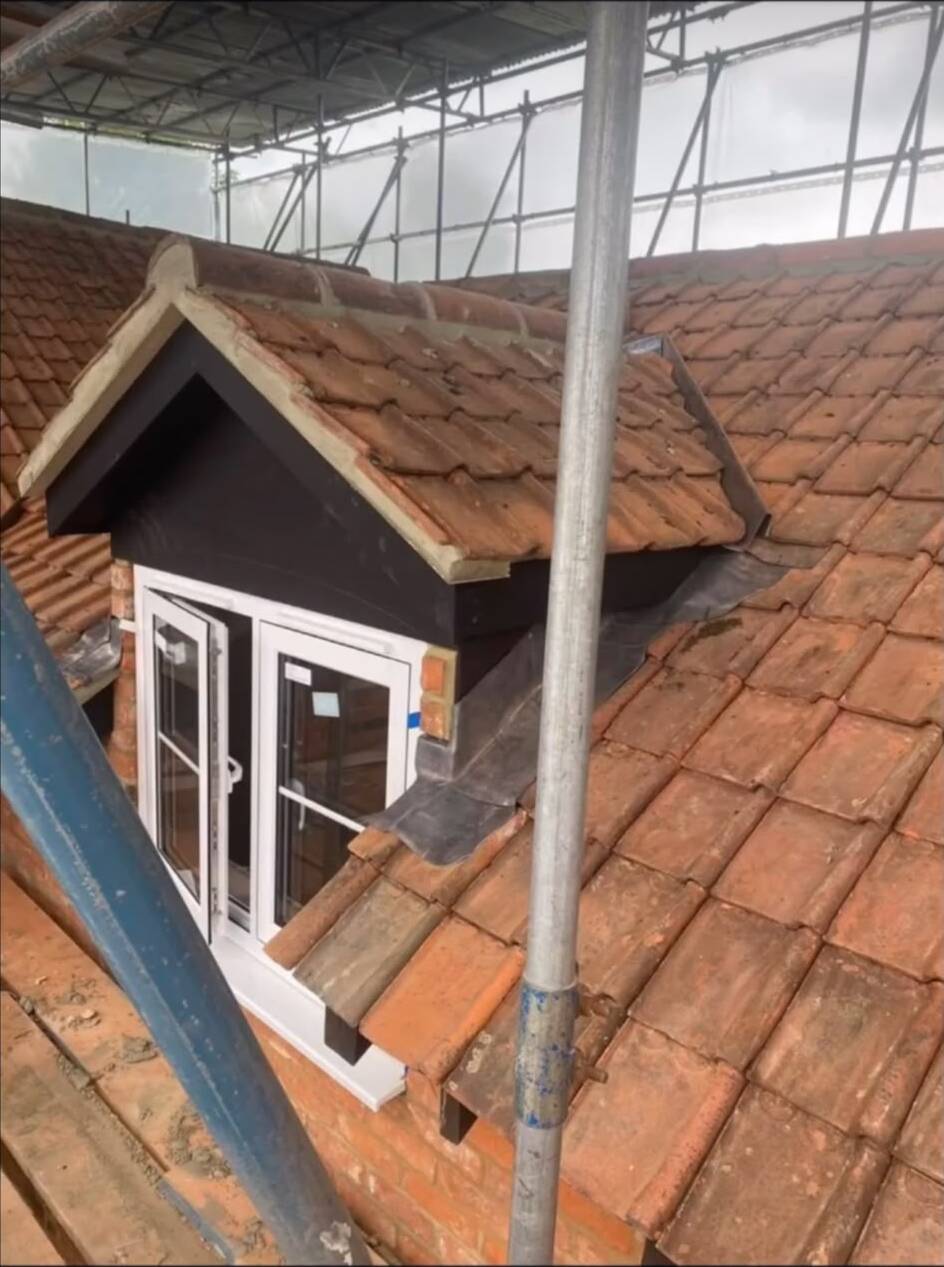
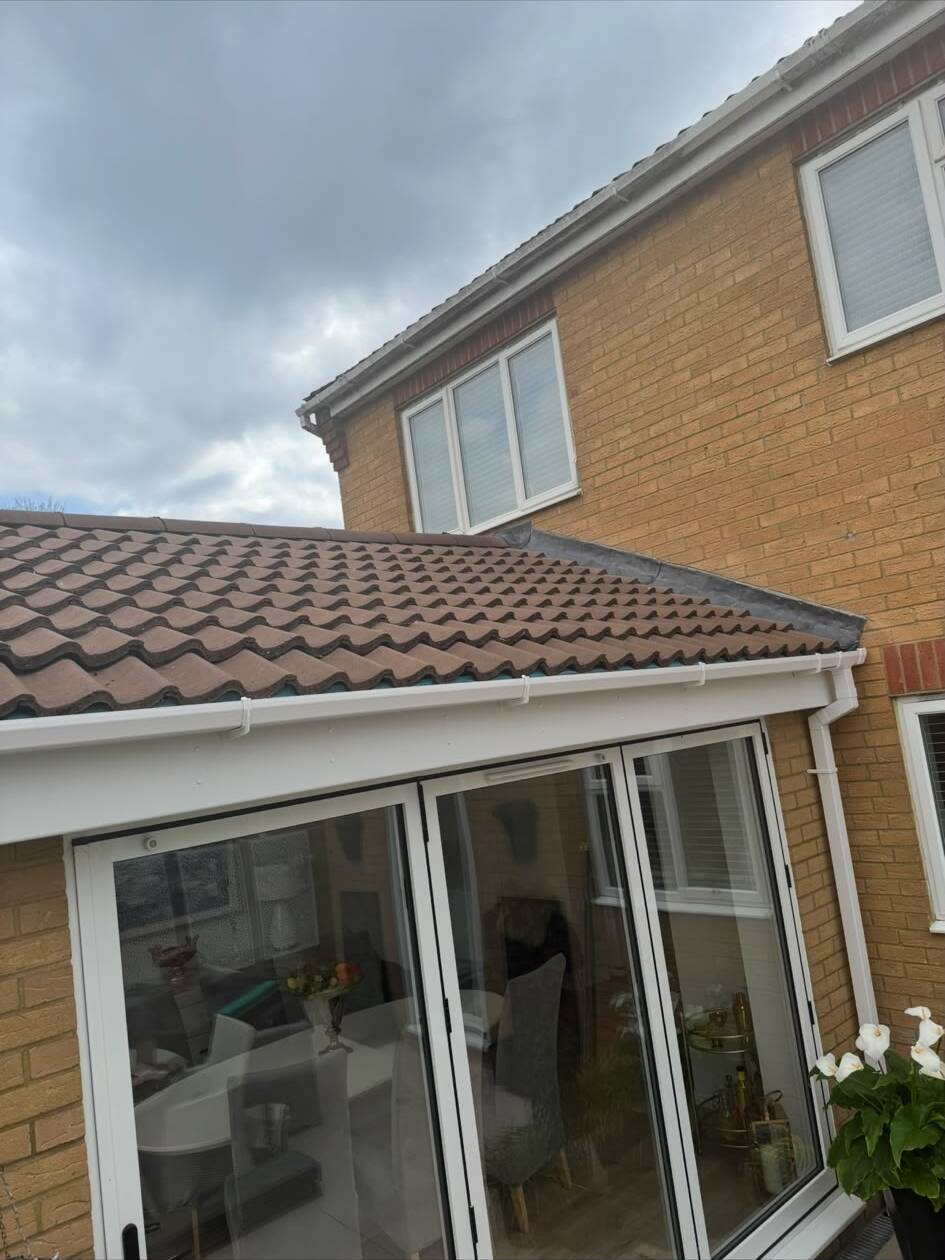
Recent Work
Real roofing projects from our workshop and sites.
FAQ
Answers to the questions we're asked most.
Straight answers on cost, timing, guarantees and coverage — no marketing filler.
- Do you take on standalone re-roofing jobs?
- We do — but our primary focus is roof work as part of larger renovation, extension or loft-conversion projects, where the coordination with joinery, insulation and internal finish adds real value.
- How much does re-roofing a house cost?
- A full re-roof of a semi-detached Hertfordshire house typically runs £8–£16k depending on size, tile type and complexity of the roof line. Flat-roof extensions typically £180–£320 per m² for the covering. Fixed itemised quotations after a site visit.
- How long does a re-roof take?
- A pitched-roof re-cover on a typical Hertfordshire semi usually takes 1–2 weeks. A flat-roof extension covering usually takes 3–7 days.
- What guarantee comes with the roof?
- Our 12-month workmanship guarantee covers the installation. In addition, most flat-roof membranes carry a 20–25 year manufacturer's warranty when installed by a trained installer, which we register on your behalf.
- Can you fix a leak without doing the whole roof?
- Sometimes — but we always inspect properly first rather than patching a symptom. If a patch is genuinely enough, we'll say so.
- Do you handle scaffolding?
- Yes — scaffolding is included and coordinated with your project's programme. All scaffolding we use is erected by insured, qualified providers.
- Do you cover the whole of Hertfordshire for roofing?
- Yes. Barnett's Bespoke works throughout Hertfordshire, into north London and southern Bedfordshire — including Buntingford, Bishop's Stortford, Stevenage, Hertford, Ware and Hitchin. We're based at Great Hormead Hall, Buntingford, and travel from there.
- Are you insured, and what guarantee do I get?
- Every project is covered by £1,000,000 public liability insurance and a 12-month workmanship guarantee. Charlie Barnett holds a Level 3 City & Guilds NVQ in carpentry and joinery, a CSCS Blue Skilled Worker card, and is a BM TRADA registered fire door installer. We're also a Trust a Trader member with a 4.98/5 rating.
- How quickly can you start?
- Larger projects are usually booked four to eight weeks ahead. Small joinery jobs and single-day repairs can often be scheduled sooner. Contact us with a rough scope and postcode and we'll come back with a realistic start window.
Roof issue you'd like a straight answer on?
Send us your postcode and photos of the problem. We'll come out, diagnose properly, and put honest options in writing.